Map collector Prashant Lahoti talks about ‘pilgrimage maps’: paintings and drawings depicting religious journeys undertaken by devotees that mark geographical features, religious sites and more.
Sacred Cartography- The New Indian Express

Corporate website
Corporate website
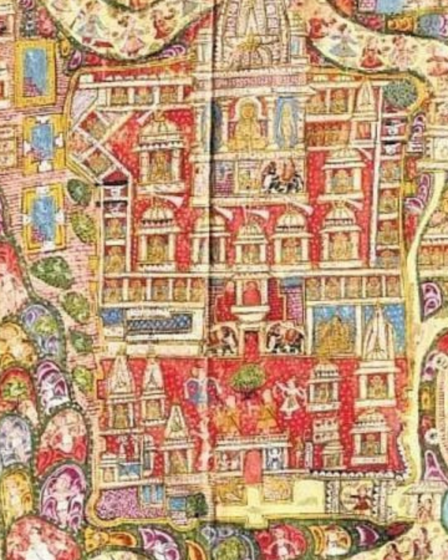
Map collector Prashant Lahoti talks about ‘pilgrimage maps’: paintings and drawings depicting religious journeys undertaken by devotees that mark geographical features, religious sites and more.
Sacred Cartography- The New Indian Express
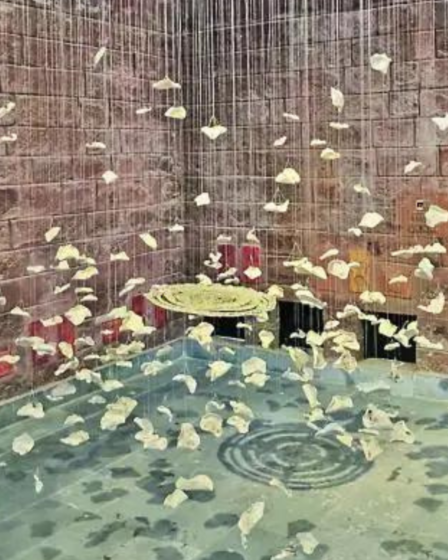
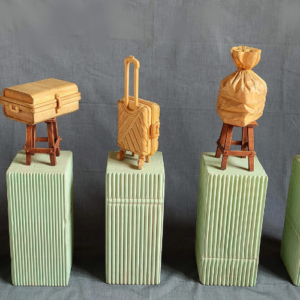
Experience the artistic explorations of the artists at Kalakriti Art Gallery. A sculptural group exhibition titled ‘Sands of Time II’ curated by Suroopa Chatterjee.
Sands of Time II at Kalakriti Art Gallery, Hyderabad – Abirpothi
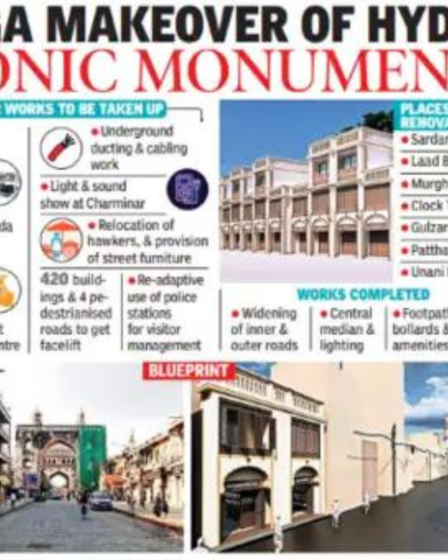
After decades of delay in implementing the Charminar Pedestrianisation Project (CPP), the Government has finally hammered out a plan to protect the monument from traffic congestion and air pollution.
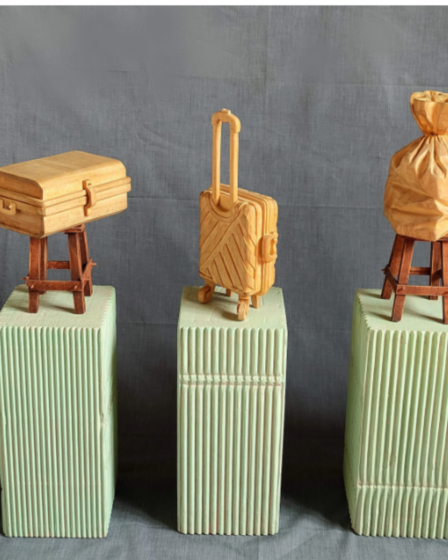
Sculpture exhibition Sands of Time II, on view at Hyderabad’s Kalakriti Art Gallery, has artists exploring fluidity of time through everyday happenings and socio-political events
An Exhibition of the Popular Prints from 19th and 20th Century Curated by Arka Prava Bose.
Windows to the Gods, an exhibition of up to ninety antique mythological chromolithographs and oleographs by Raja Ravi Varma, M. V. Dhurandhar, Bamapada Banerjee, and many lesser-known painters of the so-called “Calendar Prints” from the nineteenth and twentieth centuries.
Aside from the prints of well-known painters, the exhibition featured the early chromolithographs of the Poona Chitrashala Press, one of India’s earliest fine art lithographic presses founded in 1878. Raja Ravi Varma, who founded his own lithographic press in 1894 to disseminate his expensive oil paintings among the common people via oleographs, popularised and elevated the aesthetic stature of popular prints. The financial success of the Ravi Varma Prints inspired many outstanding painters of the subsequent generation to publish oleographs of their works.
The embellished oleographs created by some unknown women were the most appealing element of the exhibition. Women from rich families had a practise of decorating the prints of gods and goddesses with stitching in their spare time. Elegantly made, the embellished prints highlight an often-overlooked facet of the utilization of popular prints in India.
The prints on display are from the Kalakriti Archives’ Prshant Lahoti Collection.
17 May 2019 to 17 June 2019 at Kalakriti Art Gallery, Hyderabad.
Early Scientific Maps: The European maps representing India with ever-greater planimetric details in the wake of Vasco Da Gama’s arrival to the subcontinent in 1498 marked a rupture from the spiritual traditionof geographic imagination. The recognisable design of modern India can be seen as slowly taking shape inthese early trade maps.Early
Colonial Maps:These are the maps that detail the complicated and contentious
ties that existed between many European powers and significant Indian states in
order to gain control of the Indian Subcontinent. The strong graphic depictions
tell the highly ambiguous story of ambition, bravery, conflict, cunning, and
intellect as India was forcibly opened up to the rest of the globe.We have hundreds of civil and military maps and plans depicting Britain’s engagement with India, the mercantile and political history of the East India Company, and the history of British imperial authority gradually consolidating up to 1947.
The valuable collection of municipal survey maps of Hyderabad produced between 1912 and 1915 under Leonard Mann’s direction, a mining engineer with the Nizam’s Government, shows the revitalised city spaces following the devastating Musi river flood in 1908.